
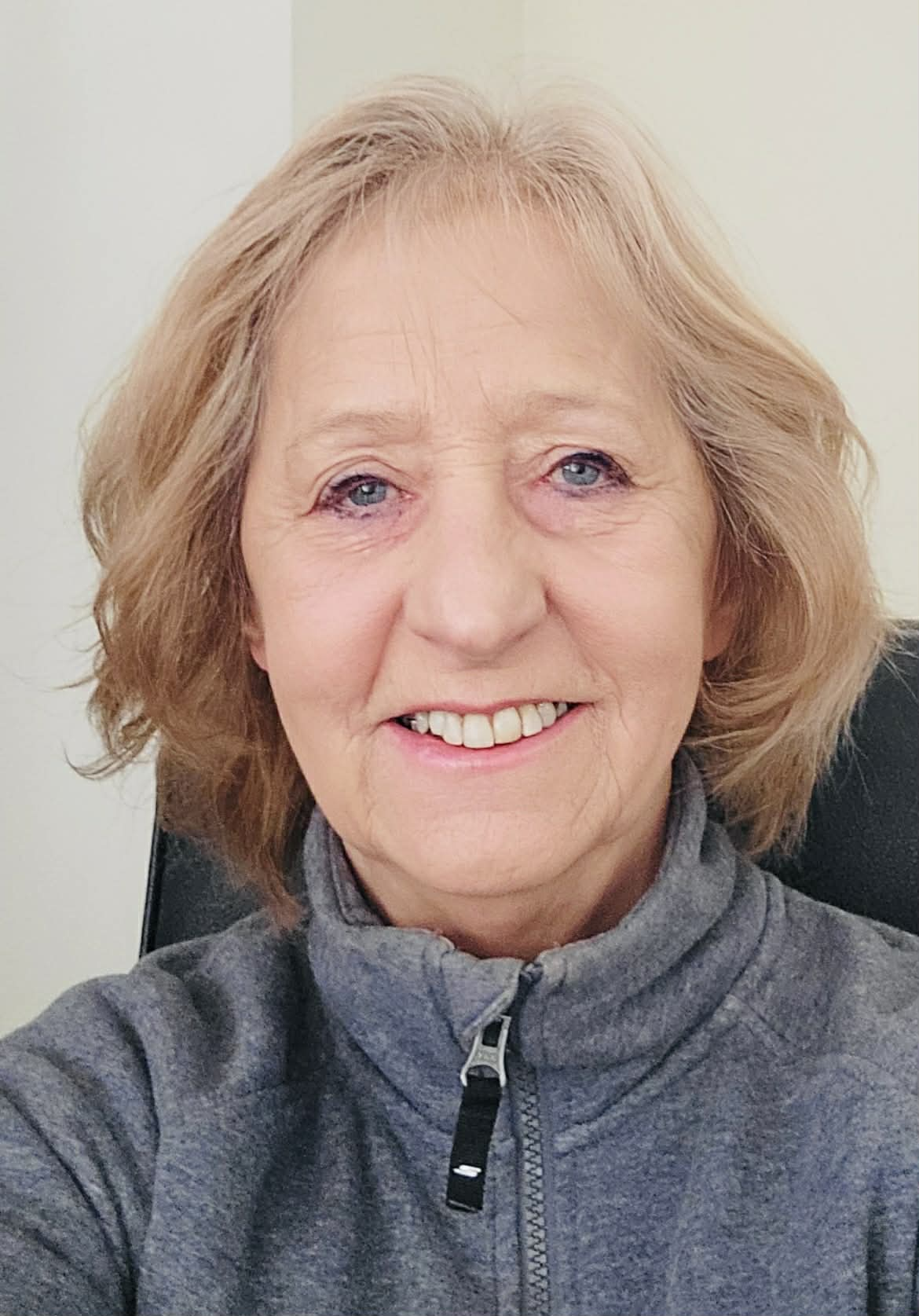
International Critical Incident Stress Management Instructor
Crisis Responder and Emergency Management Specialist
Facilitator, Trauma and Stress Resilience Training
A little about Val:
Valerie O’Leary has over 20 years of experience as a crisis responder and facilitator for the International Critical Incident Stress Management Foundation and an Emergency Responder. Valerie has a BSW and a diploma that specializes in Community and Workplace Trauma, Individual and Group Crisis Interventions, and is a Certified International Critical Incident Stress Foundation Instructor.
Val is also trained in Skills for Psychological Recovery, Psychological First Aid, ASSIST, Psychological Body Armour, Queston, Persuade and Refer (QPR) as well as Emergency Management and an instructor for Search and Rescue.
As a contractor for Telus Health, she responds to Critical and Traumatic events -providing Individual and Group Crisis Intervention. In 2022, Val won the 2022 Excellence award in Western Canada.
Val also worked in the Oilsands for 9 years, responding to incidents on most industrial sites. It was during this time, Val initiated mental wellness research, partnering with the University of Alberta. This research with its recommendations, was published and can be found on Academia.
During the last few years, Val has worked with the GOA doing Cumulative Stress workshops throughout the province. Other classes offered are Stress Management Training, QPR – Suicide Prevention and Intervention, Psychological Body Armour, Healing Ways for Indigenous Communities, Individual Crisis Intervention and Group Crisis Intervention.
Individual Crisis Intervention – 2 day workshop:
Upon successful completion, Students will receive continuing education credits from the University of Baltimore.
Course Description:
Crisis Intervention is NOT psychotherapy; rather, it is a specialized acute emergency mental health intervention which requires specialized training. As physical first aid is to surgery, crisis intervention is to psychotherapy. Thus, crisis intervention is sometimes called “emotional first aid”. This program is designed to teach participants the fundamentals of, and a specific protocol for, individual crisis intervention. This course is designed for anyone who desires to increase their knowledge of individual (one-on-one) crisis intervention techniques in the fields of Business & Industry, Crisis Intervention, Disaster Response, Education, Emergency Services, Employee Assistance, Healthcare, Homeland Security, Mental Health, Military, Spiritual Care, and Traumatic Stress.
Program Highlights
Group Crisis Intervention – 2 day workshop
Upon successful completion, Students will receive continuing education credits from the University of Baltimore.
Designed to present the core elements of a comprehensive, systematic and multi-component crisis intervention curriculum, the Group Crisis Intervention course will prepare participants to understand a wide range of crisis intervention services. Fundamentals of Critical Incident Stress Management (CISM) will be outlined and participants will leave with the knowledge and tools to provide several group crisis interventions, specifically demobilizations, defusings and the Critical Incident Stress Debriefing (CISD). The need for appropriate follow-up services and referrals, when necessary, will also be discussed.
This course is designed for anyone in the fields of Business & Industry Crisis Intervention, Disaster Response, Education, Emergency Services, Employee Assistance, Healthcare, Homeland Security, Mental Health, Military, Spiritual Care, and Traumatic Stress.
Program Highlights
GRIN – Combination of Individual and Group Crisis Intervention – 3 days
Upon successful completion, Students will receive continuing education credits from the University of Baltimore.
Compassionate Fatigue – 3 hour workshop
Course description
Compassion Fatigue has been called “the cost of caring” for helping professionals /individuals, and its effects can have lasting negative consequences on our health, wellbeing, and work performance. People who are exposed to others’ trauma and suffering and who work under stressful conditions are especially vulnerable to developing compassion fatigue, vicarious trauma, and moral distress. While there are structural elements to these problems, there are also practices that individuals can put into place to lower their risk, or to recover if they’ve already been affected. This course will teach practical strategies for self-reflection and self-care that will build participants’ resilience.
Stress Management Workshops – 2 – 3 hours
Workshop Focus Areas include:
QPR – Question, Persuade and Refer – Suicide Prevention and Intervention 2 -3 hours
The QPR mission is to save lives and reduce suicidal behaviours by providing innovative, practical and proven suicide prevention training. We believe quality education empowers all people, regardless of their background, to make a positive difference in the life of someone they know.